


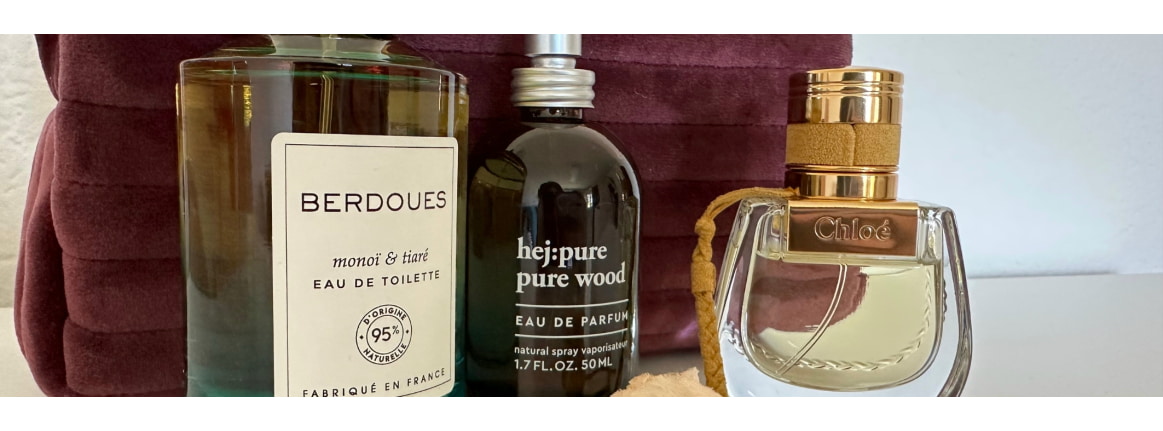
Fragrances accompany us every day and subtly influence our well-being. Through our sense of smell, we perceive countless stimuli – often unconsciously, yet with great impact. Whether a scent feels pleasant or overwhelming depends largely on its concentration. The history of perfumes begins with the word “Eau” – French for “water.” But what exactly is the difference between eau de toilette vs eau de perfume?
The art of perfumery has a long-standing tradition. With craftsmanship and finesse, scents are created, captured, and preserved. Techniques such as enfleurage or distillation are classic methods of extracting precious essences. Creating a perfume is a complex process – far more than simply mixing fragrant substances. Perfume is not just perfume!
The Basics – Composition of a Fragrance
Without diving too deeply into chemistry, a fragrance mainly consists of three elements, according to the Cosmetics, Toiletry, and Fragrance Association. The base is usually alcohol (ethanol), to which water and aromatic compounds are added. The alcohol ensures that your favorite fragrance remains stable in the bottle and that the scent unfolds fully when applied. Depending on the ratio of these elements, a fragrance may feel strong or light. A scent that’s too dominant can quickly become overwhelming in certain situations. Fragrance concentrations are the key to balancing this delicate equilibrium.
Longevity vs. Sillage
Before we go deeper into this magical world, it’s important to distinguish between longevity (French: tenue) and sillage. According to Sillage Paris, sillage refers to the scent trail a fragrance leaves in the air – that subtle aura noticeable when someone walks past. A fragrance may project strongly at first but vanish within an hour. Longevity, on the other hand, describes how long the scent actually lingers on your skin. When discussing concentrations, longevity is especially relevant.
Fragrance Concentrations and Categories
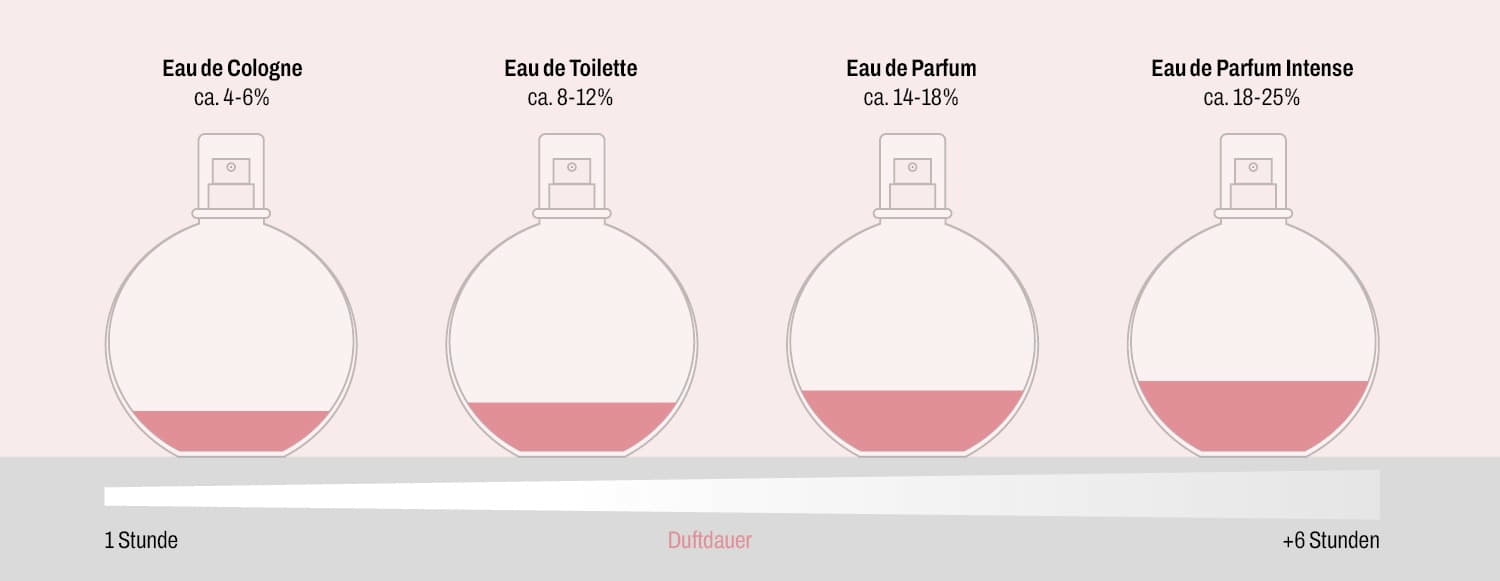
In perfumery, certain terms have become standard to indicate the approximate concentration of aromatic compounds. These values can vary slightly by brand, but the most common ones are eau de cologne, eau de toilette, and eau de perfume. More intense versions such as eau de parfum intense are also available. Let’s take a closer look, drawing on insights from Maison Fragonard and Maison Violet.
Eau de Cologne (EdC) – A Timeless Refreshment
This traditional fragrance has a rich history and is especially popular among men. Even today, it is often used after shaving for an extra touch of freshness (though not directly on freshly shaved skin). Eau de cologne is the lightest fragrance concentration and is usually applied generously in the morning. Particularly in summer, it provides refreshing lightness and often comes in classic bottles without atomizers for easy splash application.
- Concentration: approx. 4–6%
- Longevity: 1–2 hours
-

-
 Final Price CHF 67.55 Regular Price CHF 75.1010 %100 ml
 -
 Final Price CHF 24.3030 ml


Eau de Toilette (EdT) – The Everyday Classic
Whether winter or summer, eau de toilette is versatile and suitable for all seasons. Designed for frequent application, it can be reapplied throughout the day without being overpowering. It’s especially refreshing on hot days, when heat enhances fragrance intensity. Sprayed on pulse points, eau de toilette offers a revitalizing, light sensation.
- Concentration: approx. 8–12%
- Longevity: 3–4 hours
-

-
 Final Price CHF 20.90 Regular Price CHF 29.9030 %30 ml
 -
 Final Price CHF 55.5030 ml
 -
 Final Price CHF 86.75 Regular Price CHF 108.4520 %60 ml


Eau de Perfume (EdP) – The Iconic Scent
With greater depth and character, eau de perfume is often reserved for colder days or special occasions. It’s the most iconic fragrance type – so much so that in everyday language we often simply say “perfume.” Eau de perfume strikes the perfect balance, allowing a fragrance to fully bloom with just a few sprays.
- Concentration: approx. 14–18%
- Longevity: up to 6 hours
-
 Final Price CHF 67.30 Regular Price CHF 84.1020 %30 ml
 -
 Final Price CHF 66.30 Regular Price CHF 82.8520 %30 ml
 -
 Final Price CHF 115.40 Regular Price CHF 144.2520 %50 ml


Eau de Perfume Intense – The Bold Character
The word “Intense” says it all: higher concentration, greater intensity. Depending on the blend, eau de parfum intense can even last for days. Also labeled “Extrait” or “Absolu”, it’s best reserved for very special occasions. Use it sparingly – a few sprays on select areas are enough, otherwise it can become overwhelming.
- Concentration: approx. 18–25%
- Longevity: 6+ hours
-
 Final Price CHF 98.80 Regular Price CHF 123.5020 %30 ml
 -
 Final Price CHF 206.00100 ml
 -
 Final Price CHF 162.8050 ml
 -
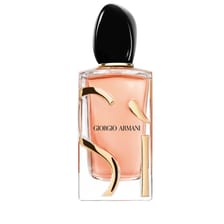 Final Price CHF 159.10 Regular Price CHF 198.9020 %100 ml


Tip: Applying a nourishing body lotion as a base helps enhance fragrance intensity and improves longevity.
In daily life, I often reach for a classic eau de perfume, while in summer, I enjoy an eau de toilette. My treasured eau de parfum intense is reserved for elegant events. No matter which type you choose, the most important thing is that you feel comfortable.
From floral notes reminiscent of spring to warm, spicy accords evoking cozy evenings by the fireplace – the world of fragrances is a fascinating universe waiting to be explored.
FAQ
Frequently Asked Questions
Which is better: Eau de Perfume or Eau de Toilette?
It depends entirely on your taste and the occasion.
- Eau de perfume has a higher concentration (14–18%), lasts longer, and is ideal for cooler days or formal events. Just a few sprays are enough.
- Eau de toilette is lighter (8–12%), fresher, and perfect for everyday wear or warm summer days. It can easily be reapplied.
Since many fragrances are available in both versions, you can choose flexibly according to your needs.
Why is Eau de Perfume more expensive than Eau de Toilette?
The reason is simple: eau de perfume contains more aromatic oils. These ingredients are the most costly part of a fragrance. Higher concentrations also often mean more complex compositions with premium raw materials. The higher price therefore reflects quality, intensity, and longevity.